
Telangana Unveils AI-Powered Digital Twin of IT Minister at DevFest 2026
The launch signals Telangana’s interest in applying AI beyond technology demonstrations to public-facing services

The launch signals Telangana’s interest in applying AI beyond technology demonstrations to public-facing services
Hexaware’s certification reflects the experience of engineers working at the intersection of enterprise client needs and emerging technology
The network will connect key data centre corridors across India, starting with Mumbai, Pune, Hyderabad and Chennai, before expanding to other regions.
Automakers face rising software complexity, frequent over-the-air updates and compliance demands as vehicle validation becomes harder to scale.
Anjali Sardana’s Provision Labs aims to enhance AI systems for physical tasks, building on Pronto’s new initiative for household service training.
As GCCs take on more complex responsibilities, demand for specialised capabilities is expected to grow, including platform engineering, cybersecurity, solution
NVIDIA, AMD and Broadcom have indicated an interest in purchasing up to $5 billion collectively in the Class A offering.
The initiative will combine hands-on IT instruction for educators with plans to make computer education compulsory from 6th standard across Bihar’s government s
Start-up’s planned listing could be the biggest stock market debut in history
Without safeguards, powerful new technology will widen the gap between those with access and those without
US House oversight committee probes Delaware proposal that would allow corporate entities to be run by autonomous bots
240,000-word prospectus lays out explosive growth alongside steep losses and daunting risk factors
Prospectus details AI lab’s ‘mission’, $800bn data centre commitments and extraordinary governance structure
Tech giant moves to control costs and it spends up to $175bn on AI infrastructure this year
Chipmakers Nvidia, AMD and Broadcom will act as cornerstone investors

California companies have scooped up more than three-fourths of all U.S. startup funding this year. That, per Crunchbase data, is an apparent record share. And keep in mind: This year still has a couple months left.

False claims about customers, revenue and AI capabilities can expose founders to personal securities-fraud liability, with D&O insurance offering limited protection against established misconduct. Guest author Kyle Jeziorski of Founder Shield shares three policy provisions that need close attention from founders.

In an S-1 filing today preceding what could be the largest IPO ever, Anthropic laid out extensive new details about its earnings, growth, key stakeholders and the risks it faces going forward. Clocking in at 335 pages, the document wasn’t exactly light reading. However, in a preliminary once-over, we highlight some of the more intriguing disclosures.
Consider what passes for success in technology policy. An AI company promises that its chatbot will not encourage suicide. A social media platform makes it more difficult for children to buy fentanyl. These are important protections, and they should have existed all along. But companies can clear these low bars while continuing to make products…
This story originally appeared in The Algorithm, our weekly newsletter on AI. To get stories like this in your inbox first, sign up here. After weeks of frenzied speculation, Anthropic has filed its IPO prospectus. The 335-page document (100 pages or so are focused on risks) lays out the company’s unique view of the technology it…
Nace AI has released Drex for Search, bringing its Drex decision models to document search for AI agents. Nace reports 92.05% on BrowseComp-Plus with 12.6 search calls, and fewer agent turns on OfficeQA Pro.
The post Nace AI Releases Drex for Search for AI Agents: 92.05% on BrowseComp-Plus With 12.6 Search Calls appeared first on MarkTechPost.
OpenAI shares model results on the Kakeya conjecture, Exponential Time Hypothesis, and quantum chromodynamics—and how researchers can verify and build on them.
Fanatics uses OpenAI to help fans complete their game-day outfits with Shop the Look. Testing across roughly 30,000 MLB products showed 10% higher engagement.
See how OpenAI engineers use Codex Ultrafast to investigate incidents in minutes. Explore faster security analysis, code refactoring, and daily workflows.
Explore OpenAI Signals data on 165 work activities across nearly 100 countries, revealing how people use ChatGPT for work and how usage changes over time.
CodeRabbit uses GPT-6.1 Sol to investigate security risks across complex codebases. Its security agent helps developers review findings and proposed fixes.
Coyotec is bilingual, swears, and tells listeners how to defend themselves against ICE. Its popularity comes as more broadcasters are experimenting with artificial personalities.
Jayden, Sam, and Zack are eagerly pitching editors on reported stories and investigative features. The catch? They’re all AI agents.
Anthropic on Monday filed documents ahead of a blockbuster IPO that offers insight into the company’s financials, risk factors, and views on the future of AI.
Anthropic thinks “closing the loop” is the best path to AI triumph—and a recipe for “existential” threats to humanity.
Anthropic’s S-1 filing is hundreds of pages long—and it leaves out quite a few financial details. “Anthropic owes investors more information,” one analyst tells WIRED.
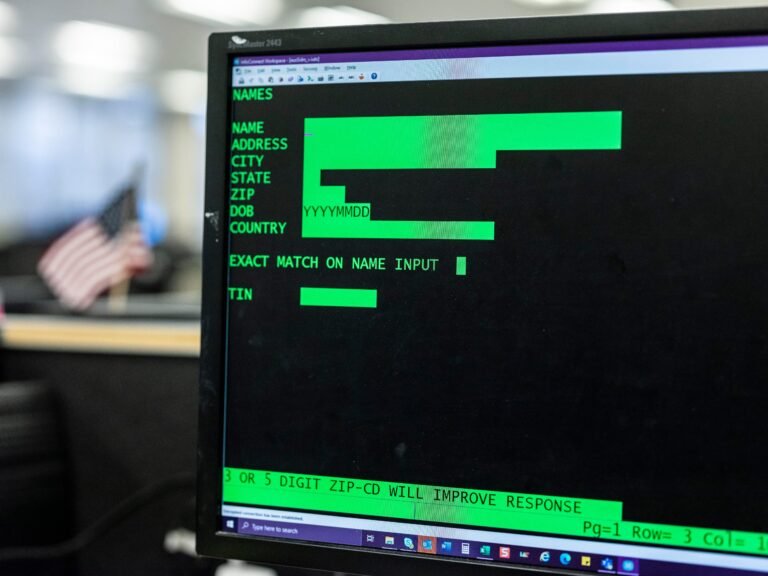
What do the IRS, banks, airlines, and government infrastructure around the world have in common? They’re all running on systems propped up by antique computer code that nobody dares touch, lest everything come crashing down. OpenAI thinks it may have a solution. On October 19th, the company touted “substantial improvements” in its latest AI models’ […]

Anthropic has filed its S-1 prospectus with the Securities and Exchange Commission, preparing the company behind Claude to beat OpenAI to the punch with an IPO. In a filing with the SEC, Anthropic said it plans to list on the Nasdaq exchange under the ticker symbol “ANT.” The AI company confidentially filed with the SEC […]
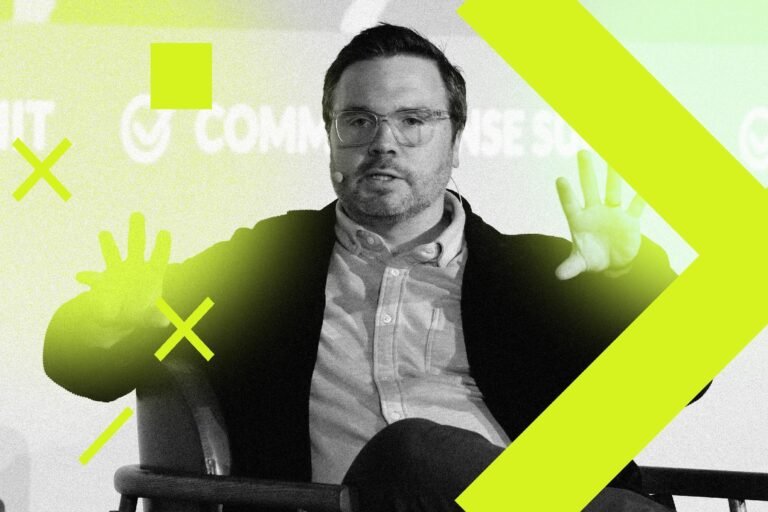
Today, I’m talking to Kevin Roose, journalist and author of the new book The AGI Chronicles, which details the recent and explosive transformation of the AI industry. Kevin was a longtime New York Times reporter and host of the popular podcast Hard Fork, but he and friend of the show Casey Newton just left the […]

Microsoft is offering voluntary buyouts to up to 60,000 employees across the US, UK, Canada, and India. In a message to employees, Microsoft chief people officer Amy Coleman writes that this gives staff members “the opportunity to leave Microsoft with financial support and career planning resources” as the company looks to trim staff without another […]