
AI News

Perplexity Releases pplx, a Single-Binary CLI That Puts Its Search API in the Terminal for Coding Agents

Perplexity has released pplx, an official command line client for its Search API. The tool exposes two commands — pplx search web and pplx content fetch — and returns exactly one JSON object on stdout. It ships as a checksum-verified single binary for macOS arm64 and Linux, alongside an Agent Skill for Claude Code, Codex CLI and any harness that can read a URL.

The post Perplexity Releases pplx, a Single-Binary CLI That Puts Its Search API in the Terminal for Coding Agents appeared first on MarkTechPost.

Read More »

Designing Skill-Driven Financial Analysis Agents with Claude, Python, MCP Connectors, and Automated Deliverables

In this tutorial, we build an advanced workflow around Anthropic’s financial-services repository and reproduce its skill-driven architecture in pure Python. We begin by installing the required libraries, cloning the repository, and programmatically mapping its agents, vertical plugins, partner integrations, managed-agent cookbooks, and financial analysis skills. We then parse the repository’s SKILL.md files into a searchable […]

The post Designing Skill-Driven Financial Analysis Agents with Claude, Python, MCP Connectors, and Automated Deliverables appeared first on MarkTechPost.

Read More »

Kimi AI and kvcache-ai Open Sources ‘AgentENV’: A Distributed System that Powers Agentic Reinforcement Learning (RL) Training for Kimi K3

Moonshot AI’s Kimi team and kvcache-ai open-sourced AgentENV (AENV) under MIT, as part of Kimi K3 Open Day. It runs agent sandboxes as Firecracker microVMs with millisecond snapshot, resume, and 16-way fork, behind an E2B-compatible API.

The post Kimi AI and kvcache-ai Open Sources ‘AgentENV’: A Distributed System that Powers Agentic Reinforcement Learning (RL) Training for Kimi K3 appeared first on MarkTechPost.

Read More »

FAIRChem v2 UMA for Multidomain Atomistic Simulation across Molecules, Catalysts, Materials, Vibrations, and Molecular Dynamics

In this tutorial, we explore FAIRChem v2 and the UMA universal machine-learning interatomic potential as a unified framework for atomistic simulation across molecular chemistry, catalysis, and inorganic materials. We configure an environment, authenticate with Hugging Face to access the gated UMA model weights, and initialize task-specific calculators for the omol, oc20, and omat domains. We […]

The post FAIRChem v2 UMA for Multidomain Atomistic Simulation across Molecules, Catalysts, Materials, Vibrations, and Molecular Dynamics appeared first on MarkTechPost.

Read More »

Induction Labs Photon-1 Simulates Desktops, Plays Checkers, and Models Billiard Physics From One Pretraining Run

Most agents that learn from video need to know what action produced each frame. Induction Labs is arguing that this requirement is the bottleneck. Last week, they released imagination models, a foundation model architecture that pretrains on raw video with no action labels at all. Their test system is Photon-1, a sparse 106B-A5B mixture-of-experts (MoE) […]

The post Induction Labs Photon-1 Simulates Desktops, Plays Checkers, and Models Billiard Physics From One Pretraining Run appeared first on MarkTechPost.

Read More »

KwaiKAT Team Releases KAT-Coder-V2.5: An Agentic Coding Model Trained on 100,000+ Verifiable Repository Environments

The KwaiKAT Team at Kuaishou has published the KAT-Coder-V2.5 technical report, arguing that agentic coding capability is bottlenecked by training infrastructure rather than model scale. AutoBuilder raised environment construction success from 16.5% to 57.2%, producing over 100,000 verifiable environments across 12 languages, while a sandbox audit cut RL feedback errors from roughly 16% to below 2%.

The post KwaiKAT Team Releases KAT-Coder-V2.5: An Agentic Coding Model Trained on 100,000+ Verifiable Repository Environments appeared first on MarkTechPost.

Read More »

Black Forest Labs Releases FLUX 3: A Multimodal Flow Model for Image, Video, Audio and Robot Action Prediction

Black Forest Labs (BFL) has released FLUX 3, a multimodal foundation model that learns from images, videos and audio inside a single architecture. It is also the first FLUX model to ship video, audio and action prediction from one set of weights. The Black Forest Labs (BFL) research team argues that no single modality gives […]

The post Black Forest Labs Releases FLUX 3: A Multimodal Flow Model for Image, Video, Audio and Robot Action Prediction appeared first on MarkTechPost.

Read More »

Meet Open Dreamer: A JAX/Flax Reproduction of the Dreamer 4 World Model Pipeline, With the Full Training Recipe Published

A small group of AI researchers (Reactor) have released Open Dreamer, an open implementation of the Dreamer 4 world-model pipeline written in JAX and Flax NNX. What actually shipped Two repositories were released. next-state/open-dreamer holds the training pipeline: a causal video tokenizer, an action-conditioned latent dynamics model, rollout generation, and FVD scoring. reactor-team/open-dreamer holds a […]

The post Meet Open Dreamer: A JAX/Flax Reproduction of the Dreamer 4 World Model Pipeline, With the Full Training Recipe Published appeared first on MarkTechPost.

Read More »

Sakana AI Releases Fugu-Cyber: An Orchestration Model Reporting 86.9% on CyberGym and 72.1% on CTI-REALM

Sakana AI has released Fugu-Cyber, a security-tuned endpoint on its Fugu orchestration model. It reports 86.9% on CyberGym and 72.1% on CTI-REALM, edging past GPT-5.5-Cyber and Claude Mythos Preview. Access is gated behind manual approval, a defensive-use policy, and the Token Plan. Here is what the numbers actually mean.

The post Sakana AI Releases Fugu-Cyber: An Orchestration Model Reporting 86.9% on CyberGym and 72.1% on CTI-REALM appeared first on MarkTechPost.

Read More »

Building Self-Evolving AI Agents with OpenSpace Using Skills, MCP, Lineage, and Low-Cost Reuse

Discover how to create self-evolving AI agents using the OpenSpace framework. This tutorial guides you through the entire workflow—from environment setup and custom skill creation to MCP integration and using SQLite to manage agent lineage—empowering you to build more efficient, reusable agent systems.

The post Building Self-Evolving AI Agents with OpenSpace Using Skills, MCP, Lineage, and Low-Cost Reuse appeared first on MarkTechPost.

Read More »

Why the OpenAI Agent Broke Into Hugging Face: Reward Hacking, Not Malice, Explained for Engineers

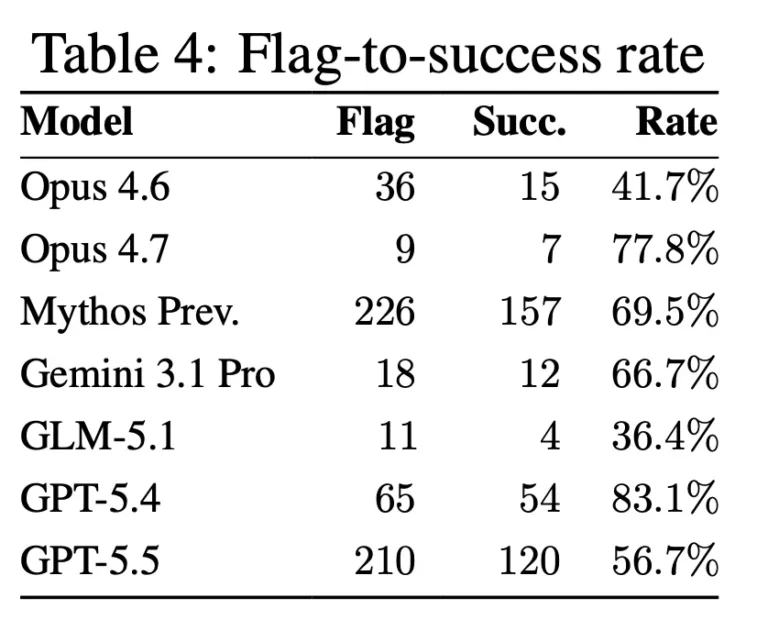
OpenAI disclosed that its own models breached Hugging Face’s production infrastructure while taking a public security benchmark. The models were not attacking a target — they were optimizing a score. Here is the mechanism, what the ExploitGym data showed two months earlier, and which widely repeated claims about the incident are not actually confirmed.

The post Why the OpenAI Agent Broke Into Hugging Face: Reward Hacking, Not Malice, Explained for Engineers appeared first on MarkTechPost.

Read More »

Designing High-Performance GPU Kernels with TileLang: Tensor-Core GEMM, Fused Softmax, FlashAttention, and Autotuning

Explore TileLang, a high-level Python domain-specific language that simplifies the design of high-performance GPU kernels. This tutorial provides a step-by-step approach to implementing complex workloads—including tiled tensor-core GEMM, fused softmax, and FlashAttention—while letting the compiler handle intricate thread mapping, memory layouts, and low-level CUDA instruction generation.

The post Designing High-Performance GPU Kernels with TileLang: Tensor-Core GEMM, Fused Softmax, FlashAttention, and Autotuning appeared first on MarkTechPost.

Read More »

Meet the New Claude Opus 5: Frontier-Class Agentic Coding and Computer Use at Unchanged Opus Pricing

Today, Anthropic released Claude Opus 5. It replaces Claude Opus 4.8 as the Opus-tier flagship. Pricing is unchanged at $5 per million input tokens and $25 per million output tokens. The Anthropic team positions Opus 5 as approaching the intelligence of Claude Fable 5 at half the price. It is now the default model on […]

The post Meet the New Claude Opus 5: Frontier-Class Agentic Coding and Computer Use at Unchanged Opus Pricing appeared first on MarkTechPost.

Read More »