
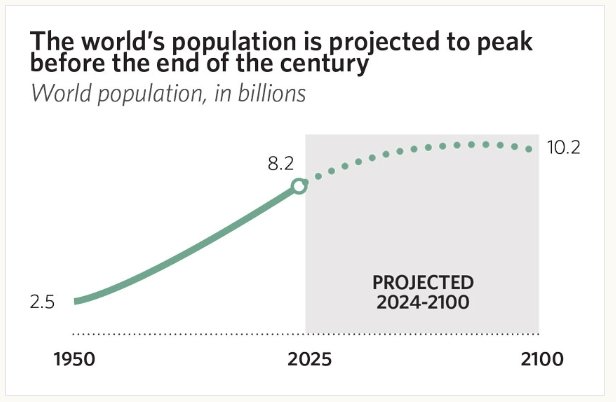
The world will have roughly 2 billion more people by the end of this century. But where those people live, how old most of them are and where the next generation of workers will come from is shifting. This could reshape how HR leaders think about talent pipelines, workforce planning and global strategy today.
That’s the headline from a new Pew Charitable Trusts analysis of United Nations population projections, and the implications run deep for anyone responsible for building and sustaining a workforce.
The workforce is aging
The data shows that the world is aging fast. The global median age is projected to climb from 31 today to 42 by 2100. That 35% increase could impact the workforce, from benefits design to retirement strategy to how organizations structure career paths.
For HR leaders, this could require planning for workers who stay longer, need different kinds of support at different life stages and may require phased retirement frameworks that most organizations haven’t built yet.
Workers around the world
Where future workers will come from is changing just as dramatically. Organizations that are building recruitment infrastructure, university partnerships and workforce development programs in sub-Saharan Africa and South Asia today may enjoy a meaningful advantage as labor markets tighten in the West.

Africa
Five countries, including the Democratic Republic of Congo, Ethiopia, Nigeria, Pakistan and Tanzania, are projected to account for more than 60% of global population growth by 2100. Of the 10 countries expected to contribute most to growth, according to the report, the U.S. is the only one outside Africa and Asia.
Africa, the world’s youngest region with a current median age of just 19, is projected to remain the youngest by century’s end. That sustained youth demographic makes it a long-term anchor for early-career hiring, apprenticeship programs and emerging market expansion.
Europe
Europe tells a different story, according to Pew researchers. Already the world’s oldest region, with a median age of 43, the continent faces sustained pressure on its working-age population. For HR leaders with European operations, that means workforce scarcity is a current problem that is accelerating demand for automation, immigration-friendly talent strategies and cross-border hiring.
Read more |Filling workforce gaps: Hung Lee on the global talent shortage
The Middle East
The Middle East, while not among the highest-growth regions in the U.N. projections, sits at a strategic crossroads geographically positioned between Africa’s youth bulge and Asia’s shifting demographics. HR leaders with Gulf operations in particular should be tracking how those policy environments evolve alongside the broader regional demographic picture.
Asia
Asia defies a single headline, and that complexity matters for workforce planning. India peaks at 1.7 billion before falling to 1.5 billion by 2100 while China keeps contracting. Yet, South and Southeast Asia together still anchor an enormous talent base in the near-to-mid term.
Countries like Indonesia, Vietnam and the Philippines are young, growing and increasingly producing the kind of skilled, globally mobile workforce that multinational employers compete hard to attract. HR leaders building Asia-Pacific talent strategies should be thinking beyond China and India as the region’s secondary markets are where the workforce growth story is increasingly being written.
China and the U.S.
Two other projections carry direct workforce implications. China will lose nearly half its population by 2100. It will shrink to 633 million, tightening the labor supply multinationals have long relied on for manufacturing and operations.
The U.S., by contrast, is expected to grow slowly and steadily to 421 million. But its share of the global population will shrink, dropping from the world’s third-most populous country to sixth. For U.S.-based HR leaders competing for international talent, that relative decline matters as competition for globally mobile workers will intensify as other regions grow faster.
HR leaders grappling with global workforce shifts won’t want to miss this session at HR Tech Europe, April 22-23 in Amsterdam. Navigating Tomorrow’s Talent Landscape brings together a panel of CHROs, including Nikki Hall of AMS and Roel Dumont of Cofinimmo, to examine how organizations can develop workforce intelligence and planning strategies to meet future requirements.
The post This is what the global workforce will look like by 2100, according to new research appeared first on HR Executive.
This article was originally published on HR Executive. Click below to read the complete article.