
AI News

FireRedTeam Releases FireRed-OCR-2B Utilizing GRPO to Solve Structural Hallucinations in Tables and LaTeX for Software Developers

Document digitization has long been a multi-stage problem: first detect the layout, then extract the text, and finally try to reconstruct the structure. For Large Vision-Language Models (LVLMs), this often leads to ‘structural hallucinations’—disordered rows, invented formulas, or unclosed syntax. The FireRedTeam has released FireRed-OCR-2B, a flagship model designed to treat document parsing as a […]

The post FireRedTeam Releases FireRed-OCR-2B Utilizing GRPO to Solve Structural Hallucinations in Tables and LaTeX for Software Developers appeared first on MarkTechPost.

Read More »

A Complete End-to-End Coding Guide to MLflow Experiment Tracking, Hyperparameter Optimization, Model Evaluation, and Live Model Deployment

In this tutorial, we build a complete, production-grade ML experimentation and deployment workflow using MLflow. We start by launching a dedicated MLflow Tracking Server with a structured backend and artifact store, enabling us to track experiments in a scalable, reproducible manner. We then train multiple machine learning models using a nested hyperparameter sweep while automatically […]

The post A Complete End-to-End Coding Guide to MLflow Experiment Tracking, Hyperparameter Optimization, Model Evaluation, and Live Model Deployment appeared first on MarkTechPost.

Read More »

Alibaba Team Open-Sources CoPaw: A High-Performance Personal Agent Workstation for Developers to Scale Multi-Channel AI Workflows and Memory

As the industry moves from simple Large Language Model (LLM) inference toward autonomous agentic systems, the challenge for devs have shifted. It is no longer just about the model; it is about the environment in which that model operates. A team of researchers from Alibaba released CoPaw, an open-source framework designed to address this by […]

The post Alibaba Team Open-Sources CoPaw: A High-Performance Personal Agent Workstation for Developers to Scale Multi-Channel AI Workflows and Memory appeared first on MarkTechPost.

Read More »

How to Design a Production-Grade Multi-Agent Communication System Using LangGraph Structured Message Bus, ACP Logging, and Persistent Shared State Architecture

In this tutorial, we build an advanced multi-agent communication system using a structured message bus architecture powered by LangGraph and Pydantic. We define a strict ACP-style message schema that allows agents to communicate via a shared state rather than calling each other directly, enabling modularity, traceability, and production-grade orchestration. We implement three specialized agents, a […]

The post How to Design a Production-Grade Multi-Agent Communication System Using LangGraph Structured Message Bus, ACP Logging, and Persistent Shared State Architecture appeared first on MarkTechPost.

Read More »

How to Build Interactive Geospatial Dashboards Using Folium with Heatmaps, Choropleths, Time Animation, Marker Clustering, and Advanced Interactive Plugins

In this Folium tutorial, we build a complete set of interactive maps that run in Colab or any local Python setup. We explore multiple basemap styles, design rich markers with HTML popups, and visualize spatial density using heatmaps. We also create region-level choropleth maps from GeoJSON, scale to thousands of points using marker clustering, and […]

The post How to Build Interactive Geospatial Dashboards Using Folium with Heatmaps, Choropleths, Time Animation, Marker Clustering, and Advanced Interactive Plugins appeared first on MarkTechPost.

Read More »

A Coding Implementation to Build a Hierarchical Planner AI Agent Using Open-Source LLMs with Tool Execution and Structured Multi-Agent Reasoning

In this tutorial, we build a hierarchical planner agent using an open-source instruct model. We design a structured multi-agent architecture comprising a planner agent, an executor agent, and an aggregator agent, where each component plays a specialized role in solving complex tasks. We use the planner agent to decompose high-level goals into actionable steps, the […]

The post A Coding Implementation to Build a Hierarchical Planner AI Agent Using Open-Source LLMs with Tool Execution and Structured Multi-Agent Reasoning appeared first on MarkTechPost.

Read More »

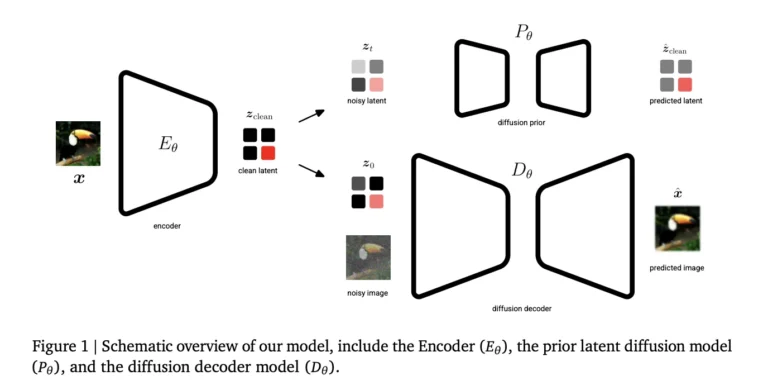
Google DeepMind Introduces Unified Latents (UL): A Machine Learning Framework that Jointly Regularizes Latents Using a Diffusion Prior and Decoder

Generative AI’s current trajectory relies heavily on Latent Diffusion Models (LDMs) to manage the computational cost of high-resolution synthesis. By compressing data into a lower-dimensional latent space, models can scale effectively. However, a fundamental trade-off persists: lower information density makes latents easier to learn but sacrifices reconstruction quality, while higher density enables near-perfect reconstruction but […]

The post Google DeepMind Introduces Unified Latents (UL): A Machine Learning Framework that Jointly Regularizes Latents Using a Diffusion Prior and Decoder appeared first on MarkTechPost.

Read More »

Trump orders federal agencies to drop Anthropic’s AI

On Friday afternoon, Donald Trump posted on Truth Social, accusing Anthropic, the AI company behind Claude, of attempting to “STRONG-ARM” the Pentagon and directing federal agencies to “IMMEDIATELY CEASE” use of its products. At issue is Anthropic CEO Dario Amodei’s refusal of an updated agreement with the US military agreeing to “any lawful use” of […]

Read More »

Defense secretary Pete Hegseth designates Anthropic a supply chain risk

Nearly two hours after President Donald Trump announced on Truth Social that he was banning Anthropic products from the federal government, Secretary of Defense Pete Hegseth took it one step further and announced that he was now designating the AI company as a “supply-chain risk,” which Anthropic says it is willing to challenge in court. […]

Read More »