
Anthropic moves to close loopholes that allow Chinese access to Claude
Engineers are still finding ways to use AI models despite stringent restrictions

Engineers are still finding ways to use AI models despite stringent restrictions

U.S. startups announced sizable funding rounds at a steady clip during a truncated holiday week, with energy and AI leading the way. Houston-based energy startup Joulent secured the biggest round, a $1.75 billion strategic financing.
Alibaba’s Page Agent runs as client-side JavaScript inside the webpage. It reads the live DOM as text, then clicks and types from natural-language commands. No screenshots, no multimodal model, and no backend rewrite are required.
The post Meet Alibaba’s Page Agent: A JavaScript In-Page GUI Agent That Controls Web Interfaces With Natural Language Through the DOM appeared first on MarkTechPost.
In this tutorial, we build a RAG-Anything workflow to explore how multimodal retrieval works across text, tables, equations, and images. We prepare a Colab environment, enter our OpenAI API key at runtime, and generate a synthetic report with a chart and PDF. We convert that content into RAG-Anything’s direct content_list format and insert it into the retrieval system. We then configure OpenAI chat, vision, and embedding functions and test naive, local, global, and hybrid modes.
The post RAG-Anything Tutorial: Build a Multimodal Retrieval Pipeline for Text, Tables, Equations, and Images in Colab appeared first on MarkTechPost.

Interfaze open-sourced diffusion-gemma-asr-small, a multilingual ASR model that transcribes via diffusion, not autoregression. It adds audio to Google’s frozen DiffusionGemma using a ~42M-parameter adapter. One adapter covers six languages, with transcription cost set by denoising steps, not transcript length.
The post Interfaze Ships diffusion-gemma-asr-small, an Open-Source Diffusion ASR Model Transcribing Six Languages via DiffusionGemma’s Parallel Denoising Decoder appeared first on MarkTechPost.
Cursor hopes to continue offering third-party AI models after it’s acquired by SpaceX, testing the relationships between frontier AI labs.
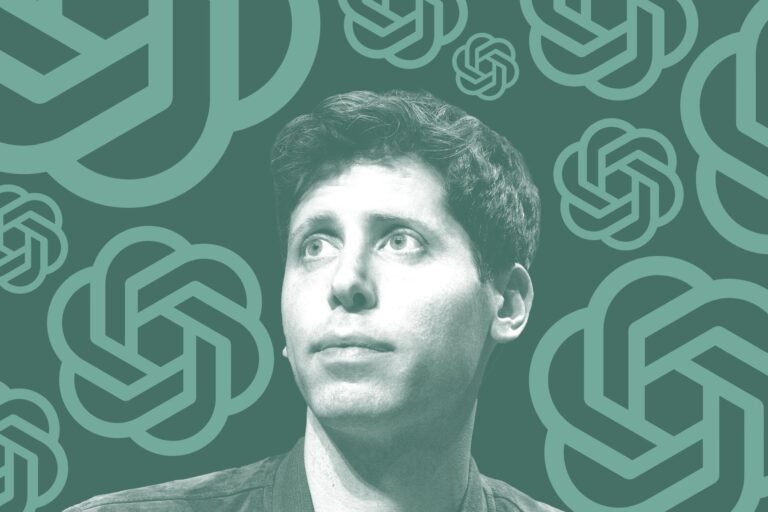
OpenAI has floated giving the US government a 5 percent ownership stake as a way of easing tensions with the Trump administration and blunting mounting public backlash against AI, according to the Financial Times. CEO Sam Altman argued that giving the public a financial interest in the company would be the best way to share […]
Ben Guez has “a bunch of potential international wives in [his] DMs,” thanks to an automated script he set up using OpenClaw, Claude code, and Instagram trials.
Microsoft follows Amazon, OpenAI, and Anthropic with its new AI deployment group.
OpenAI CEO Sam Altman has reportedly proposed giving 5% of the company’s equity to a U.S. sovereign wealth fund, reviving discussions about letting the public share in the financial gains from the AI boom.
The news comes about a week after OpenAI announced its own custom AI chip in a partnership with Broadcom.
Meta has quietly launched Pocket, an experimental AI app that lets users generate and share interactive mini games using text prompts.
Just for kicks, I took a look at Jersey Mike’s IPO documents. Surely a sandwich shop would have no need to mention AI. But lo and behold.
A flood of employment claims has left an overloaded tribunal system struggling to cope
Red tape, not funding, is the real bottleneck for competitiveness
Focus is expected to shift to making technology work for local communities rather than US companies
Past proposals for strict rules on renewable energy certificates have been dropped after heavy lobbying, draft shows
Sam Altman’s start-up in early talks for a public ownership deal as political pressure rises
The inside story on the Asia tech trends that matter, from Nikkei Asia and the Financial Times
Last month FERC gave grid operators 60 days to justify or revise how they connect ‘large loads’ — or the regulator will make the decision for them
Metrics for dangerous success and dangerous failure should be interpreted differently

Investors poured more than $200 billion into startups globally in the just-ended quarter, making Q2 2026 the second-largest quarter on record, our data shows. And, with IPOs and acquisitions returning in force, the second quarter notched one of the strongest periods for venture-backed exits in years.
Artificial intelligence may have captured the public imagination through chatbots and image generators, but some of its most consequential use cases are unfolding far from consumer-facing tools. In industries where physical infrastructure, operational continuity, and safety are paramount, AI is becoming a core operating layer. With its sprawling industrial systems and constant stream of operational…
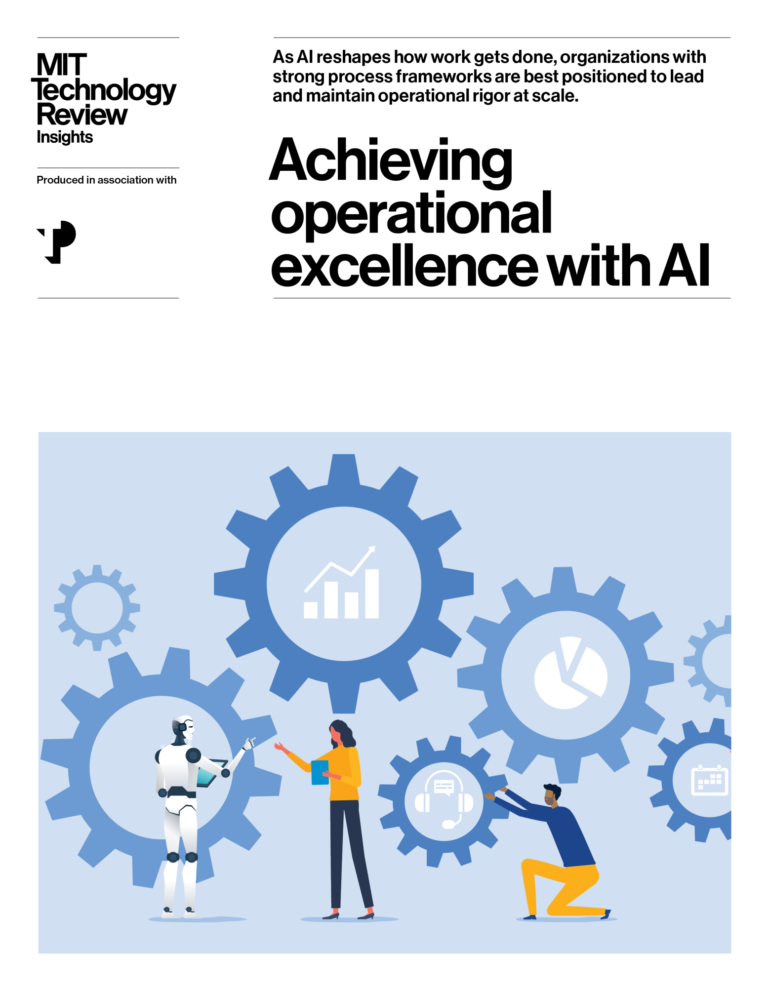
Frameworks like Lean Six Sigma and business process management (BPM) first gained traction because they promised clarity in the chaos—a structured way to bring order to messy, sprawling operations. Lean Six Sigma emphasized statistical rigor and quality control; BPM created end-to-end maps of how work should flow across departments. Both offered a repeatable way to…

Anthropic Claude Science now integrates the NVIDIA BioNeMo Agent Toolkit to accelerate computational life sciences research. Anthropic has launched the public beta of Claude Science, an AI workbench built for scientific research. The platform enables scientists to converse directly with digital agents using natural language to execute end-to-end research workflows. This system connects natively to […]
The post NVIDIA BioNeMo accelerates Anthropic Claude Science appeared first on AI News.
The Google Health API now has an open-source CLI. ghealth is a single Go binary that exposes 40 data types as agent-ready JSON. It is a community project, not an official Google release. Here’s how it works, and what to check before granting OAuth access.
The post The Google Health API Got a CLI: ghealth is an Open-Source Tool for Your Fitbit Air Data appeared first on MarkTechPost.
You bought the hardware. Now you’ll need to subscribe for “expanded access” to the most advanced features.
Neo is Bhavin Turakhia’s fifth venture and his latest involving enterprise software. This time he’s taking on Microsoft Office, Google Apps with AI.
The labs develop the technology, but citizens and their elected representatives must make the rules
Guidance to be announced as soon as next week after government intervention in Anthropic and OpenAI rollouts
In one survey, 3 in 5 employers say soft skills matter more than ever, as more than half of US and UK leaders believe young people lack them.
The post Can AI bridge the soft skills gap? appeared first on HR Executive.

Last month, a federal court denied the government’s motion to dismiss an employer’s ERC refund suit—possibly a significant victory for employers.
The post Federal court hands employers potential ERC refund win appeared first on HR Executive.
Singapore’s younger workforce is redefining career growth, and Deloitte’s Mark Nicholas Teoh says employers must adapt.
The post How Gen Zs and millennials are rewriting the rules of career success appeared first on HR Executive.

More than 8 in 10 employers are interested in using artificial intelligence to help workers better understand their benefits.
The post Employers want AI benefits support, but workers aren’t sold yet appeared first on HR Executive.

Optimising retail AI infrastructure drives the successful deployment of personalisation systems and real-time customer insight. Leaders are replacing static customer interaction patterns with data pipelines capable of modifying the user environment during a live session. Static layouts and broad segmentation rules fail to satisfy modern conversion targets. Deployments demonstrate that traditional demographic categorisation generates insufficient […]
The post Deploying retail AI to scale personalisation and customer insight appeared first on AI News.