
UK regulator warns of ‘arms race’ to keep up with AI use in financial services
FCA official makes case for greater powers for watchdog as millions use technology for personal finance decisions

FCA official makes case for greater powers for watchdog as millions use technology for personal finance decisions
The tech sector is buzzing in Britain. But can it ever be more than a US outpost?
The veteran investor has put himself at the centre of the global AI boom. Some think he now has too much control
The costs of remaining at the frontier of AI are punishing, but the penalties for falling behind may be even worse
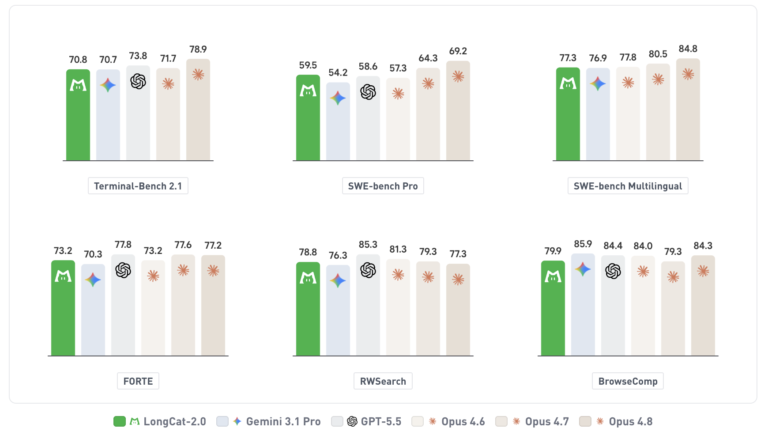
Meituan has released LongCat-2.0, a 1.6 trillion-parameter Mixture-of-Experts model that activates about 48 billion parameters per token. It pairs a native 1-million-token context, built on LongCat Sparse Attention, with training and serving run end-to-end on domestic AI ASIC superpods. Here is the architecture, the vendor-reported benchmarks, the API access path, and what remains unverified.
The post Meituan Releases LongCat-2.0: A 1.6T-Parameter Open MoE Model with Native 1M Context and LongCat Sparse Attention appeared first on MarkTechPost.

We build an end-to-end GRPO training workflow that teaches Gemma-3 to reason through GSM8K math problems. We prepare the environment, authenticate with Hugging Face, load Gemma-3, and wrap examples into a reasoning-plus-answer prompt format. We define reward functions for format adherence and numeric correctness, then attach LoRA adapters to keep training lightweight. We evaluate a baseline, run GRPO to improve the policy through group-sampled generations, and optionally export the merged model.
The post Training Gemma-3 for Structured Mathematical Reasoning with Tunix GRPO, LoRA Adapters, and GSM8K Rewards appeared first on MarkTechPost.

Synthetic Sciences has released OpenScience, an Apache-2.0 AI workbench for scientific research. It works with any frontier or open-weight model, using your own API keys. It runs the full loop across machine learning, biology, physics, and chemistry. It ships 250+ editable skills and queryable scientific databases, and it runs on your own infrastructure.
The post Synthetic Sciences Releases OpenScience: An Open-Source, Model-Agnostic AI Workbench for Machine Learning, Biology, Physics, and Chemistry Research appeared first on MarkTechPost.
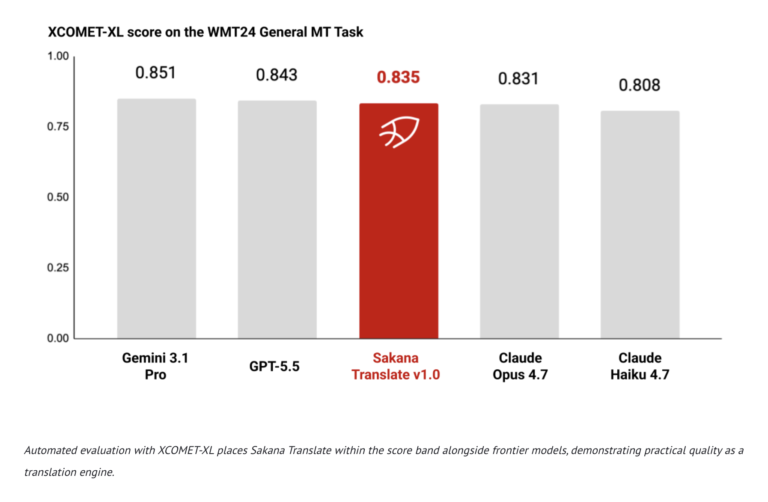
Sakana AI has added Sakana Translate to Sakana Chat. It runs on the Namazu model series. The tool translates bidirectionally across Japanese, English, and Chinese. Three modes ship together: Translate, Proofread, and Ask. This article breaks down each mode, the XCOMET-XL benchmark, and practical use cases.
The post Sakana AI Launches Sakana Translate, a Namazu-Powered Japanese–English–Chinese Translation Tool With Translate, Proofread, and Ask Modes appeared first on MarkTechPost.

“Group project, but make it 1776.” That’s how a new commercial for Google Workspace opens. And things only get cringier from there. The clip imagines what it would be like if the founding fathers turned to Google’s collaboration tools and Gemini to help them draft the Declaration of Independence. Ben Franklin texts Thomas Jefferson to […]

Most Americans don’t trust AI. It’s proven that it doesn’t know what safe toppings for pizza are. People don’t even want to listen to AI music. But none of that matters for some of America’s wealthy, who are turning to AI to teach their kids instead of traditional schools. Companies like Forge Prep and Alpha […]
These may be the last days of Amazon’s Mechanical Turk.
Junyang Lin, the former technical lead of Alibaba’s Qwen, walked through the model family in a talk “towards a generalist model / agent,” then expanded it in an essay. We read both for practitioners: Qwen3 hybrid thinking modes and dynamic thinking budgets, where the merge fell short, the shift from reasoning thinking to agentic thinking, why agentic RL infrastructure is harder, and where reward hacking bites.
The post Qwen’s Former Lead on What Hybrid Thinking Got Wrong — and Why He Now Backs Agents appeared first on MarkTechPost.
Most enterprise data still sits inside PDFs, scans, and slide decks. Large language models and agents cannot use that data until it becomes structured JSON. Open-source document extraction has become the standard way to do that conversion on your own hardware. Two different problems hide under the phrase ‘PDF to JSON.’ The first is schema-driven […]
The post Structured PDF-to-JSON: A Guide to Open-Source Extraction Models in 2026 appeared first on MarkTechPost.

LlamaIndex’s legal-kb is a public reference app that gives agents filesystem-style access to a document knowledge base on Index v2. It exposes retrieve (hybrid semantic search), find, read, and grep as tools, with automatic per-file versioning and visual citations. The stack is TanStack Start, AI SDK 6 (ToolLoopAgent), Prisma, and WorkOS.
The post LlamaIndex ‘legal-kb’: Agentic Retrieval over Index v2 with retrieve, find, read, and grep Tools appeared first on MarkTechPost.
Mistral AI, which offers some open source AI models, has raised significant funding since its creation in 2023, with the ambition to “put frontier AI in the hands of everyone.”
Alibaba has reportedly classified Claude Code as high-risk software.
As part of an ongoing legal dispute with three Hollywood studios, Midjourney is seeking to compel those studios to reveal how they use AI themselves.
Two hundred and fifty years after the signing of the Declaration of Independence, a new commercial asks: What if the Founding Fathers had access to Google Workspace?
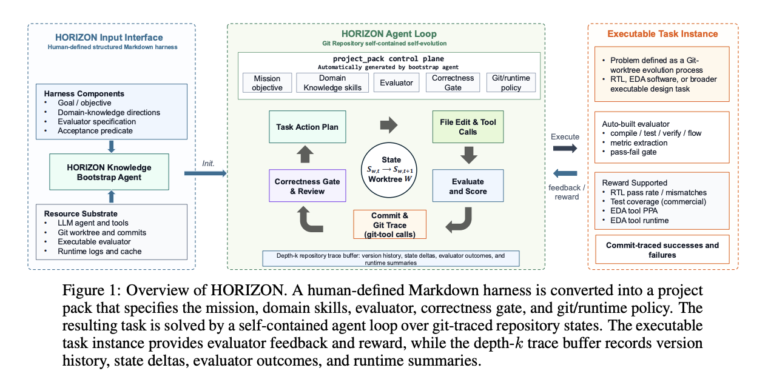
A hands-free NVIDIA agent framework hosts each RTL problem as a versioned repository, reaching 100% completion across benchmarks.
The post NVIDIA HORIZON: A Hands-Free Agent that Evolves Git Worktrees and Hits 100% RTL Benchmark Completion appeared first on MarkTechPost.
Anthropic released Claude Science in beta on June 30, 2026. The app runs on existing Claude models. A coordinating agent delegates to domain specialists, a reviewer agent flags and corrects citations and numbers, and every figure ships with its exact code, environment, and full message history. It manages compute across local machines, HPC over SSH, and Modal, and connects to 60+ databases plus NVIDIA BioNeMo skills.
The post Anthropic Launches Claude Science Beta: A Multi-Agent AI Workbench for Reproducible Genomics, Proteomics, and Cheminformatics Pipelines appeared first on MarkTechPost.

Over the past week, a new fanworks movement has kicked off, with the aim to root out authors using generative AI. But the detection methods being implemented are questionable, and any fanfic writer could be caught in the crossfire. Broad distaste around the use of Claude, ChatGPT, and other AI tools has long been a […]
The growing presence of AI in the industry’s design studios — and beyond — raises questions about authentic creativity
Stock market returns should not distract investors from the new AI trade taking hold

In this tutorial, we build an end-to-end accounts-payable extraction pipeline with lift-pdf, using synthetic invoice PDFs as controlled test documents and a structured JSON schema as the target output format. Instead of treating invoice parsing as a simple OCR task, we frame it as schema-guided document understanding: we generate realistic invoices, define fields such as […]
The post Designing a Schema-Guided Invoice Intelligence Pipeline with lift-pdf for Accounts-Payable Extraction, Validation, and Ledger Generation appeared first on MarkTechPost.
Mistral AI released Leanstral 1.5, a free Apache-2.0 code agent model for Lean 4. It saturates miniF2F and solves 587 of 672 PutnamBench problems. The 119B mixture-of-experts activates 6.5B parameters per token. We break down its architecture, benchmarks, real bug-finding case studies, and deployment code.
The post Mistral AI Releases Leanstral 1.5: An Apache-2.0 Lean 4 Code Agent Model Solving 587 of 672 PutnamBench Problems appeared first on MarkTechPost.
NVIDIA’s ASPIRE writes and refines robot control programs, then distills validated repairs into a reusable skill library. It gains up to 77 points on LIBERO-Pro and transfers zero-shot to unseen long-horizon tasks.
The post NVIDIA AI Introduces ASPIRE: A Self-Improving Robotics Framework Reaching 31% Zero-Shot on LIBERO-Pro Long Tasks appeared first on MarkTechPost.
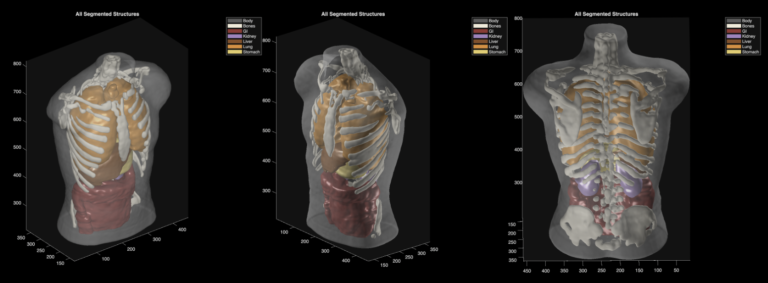
Midjourney has shown more of its futuristic medical scanner. It still hasn’t shown much proof it works. The AI startup, best known for generating images, released a behind-the-scenes video of its dunk-tank ultrasound scanner, which it plans to deploy in spas and hopes will transform medicine with cheap, detailed, radiation-free imaging. The nearly 20-minute tour […]

At the event “The Briefing: AI for Science” earlier this week, Anthropic announced Claude Science, a new “AI workbench for scientists” that pulls fragmented tools and datasets into one environment, and generates figures and visuals. Anthropic, already dominating the industry with its popular coding tools and powerful AI models, framed the launch around what it […]
Sriram Krishnan tells the FT the president is against a centralised regulator as AI backlash grows

Takeda has entered a strategic collaboration with Hong Kong-based Insilico Medicine to use AI in early-stage drug discovery across the Japanese pharmaceutical company’s therapeutic areas. The companies did not disclose which therapeutic areas or disease targets will be covered under the collaboration. The agreement gives Takeda access to Insilico’s Pharma.AI platform, which supports biological target […]
The post Takeda signs US$600M AI drug discovery deal with Insilico appeared first on AI News.

WebBrain is a free, MIT-licensed AI browser agent for Chrome and Firefox. It reads pages, extracts data, and automates multi-step tasks through Ask and Act modes. Run it on local models like llama.cpp or Ollama for privacy, or connect any cloud API.
The post Meet WebBrain: An Open-Source, Local-First AI Browser Agent That Reads Pages and Automates Tasks in Chrome and Firefox appeared first on MarkTechPost.
During negotiations on Wednesday, employees voiced frustrations with what they consider an unwillingness among executives to engage meaningfully with the prospect of unionization.
At an internal meeting, the Meta CEO reportedly said that AI development efforts were not moving as quickly as anticipated.
A US-led world order would hand a big advantage to an American oligopoly that includes his own company
Proposed campus becomes the latest casualty of growing backlash to the facilities in the US