
OpenAI pushes back on Apple trade secret lawsuit
OpenAI has issued another statement on the lawsuit, this time suggesting it lacks merit.

OpenAI has issued another statement on the lawsuit, this time suggesting it lacks merit.
The device is weirdly described as involving “mechanical elements that can move on their own” and the Bloomberg report includes the detail that the device is designed to “feel like a companion and become a physical manifestation of OpenAI’s ChatGPT.”
“Increasingly in our world, it gets harder and harder to know what is real,” Lorde said onstage.
Lightspeed is in discussions to lead the funding round, sources say.
Business leaders unwilling to embrace technology ‘should play the role of spouse’, says controversial investor
Unusually swift pace of capital injection comes as Chinese AI start-up seeks to build out infrastructure
Society has ‘precious window’ to prepare for technology advancing at historic speed, warns Nobel laureate
Governor Kathy Hochul signs one-year moratorium on new construction amid backlash over infrastructure needs
Chief executive Arvind Krishna says company ‘faltered’ as clients raced to buy servers and storage

The first quarter of 2026 was a more robust period for funding than the second, with privacy and cybersecurity startups pulling in $4.4 billion in seed- through growth-stage financing in Q2. That marked a decline of around 30% from the prior quarter and year-ago levels.
Ultieg’s Sara Chapman shares how an Employee Stock Ownership Plan is just the foundation for the organization’s people-centric culture.
The post How ESOP models bring Ultieg’s ‘people-centric’ culture to life appeared first on HR Executive.

ACA Marketplace insurers are proposing a median premium increase of 14% for 2027, indicating a likely second consecutive year of double-digit increases, according to a new analysis of preliminary rate filings in 16 states and Washington, D.C. If these increases hold, typical premiums for insurers participating in the ACA Marketplaces would jump by more than […]
The post ACA Marketplace insurers propose 14% premium hike for 2027 appeared first on HR Executive.
New reporting projects the largest labor shortage in US history. Why HR leaders should add talent scarcity to their AI-era planning.
The post The biggest workforce shortage in U.S. history is being overshadowed by AI appeared first on HR Executive.
In conversations about leadership, Gen Z’s AI anxiety isn’t the issue. It’s a symptom of an ever-widening leadership gap.
The post Gen Z’s AI anxiety isn’t really about AI appeared first on HR Executive.

Women’s weekly earnings have more than doubled since 2000, rising from $493 to approximately $1,089 in 2025, according to a recent analysis. However, the same research found that the estimated aggregate annual earnings gap between men and women still exceeded $671 billion in 2025. The research report, from MyPerfectResume.com, is based on Bureau of Labor […]
The post Women are earning more than ever. So why is the pay gap still growing? appeared first on HR Executive.

AWS (Amazon Web Services) has explained how Bluesight developed Prism, an AI layer that connects hospital pharmacy and compliance data across its product suite. Prism Assistant for ControlCheck has reached general availability and operates across 20 health systems, according to AWS vendor statements. Meanwhile, a multi-product agent for 340B Group Purchasing Organisation (GPO) compliance remains […]
The post AWS and Bluesight build AI for hospital 340B compliance appeared first on AI News.
Mistral AI introduced Robostral Navigate, an 8B embodied navigation model. It moves robots from a plain-language instruction using only a single RGB camera, with no LiDAR or depth sensors. The model reaches 76.6% success on R2R-CE validation unseen through a pointing method, prefix-caching training, and CISPO online reinforcement learning.
The post Mistral AI Releases Robostral Navigate: An 8B Model Enabling Robots to Navigate Complex Environments Using a Single RGB Camera appeared first on MarkTechPost.

Developer Hayden Bleasel has released Blume, an open-source, MIT-licensed documentation framework. It reads a folder of Markdown or MDX and generates a hidden Astro project, shipping static, AI-ready docs with local search, 30+ MDX components, llms.txt, and a built-in MCP server.
The post Meet Blume: An Open-Source, Zero-Config Documentation Framework That Ships AI-Ready Docs From a Markdown Folder appeared first on MarkTechPost.
Learn how enterprises can manage AI investments in the agentic era by measuring useful work per dollar, improving efficiency, and scaling high-value workflows.
In response to a public records request, HUD has withheld documents about DOGE’s use of AI—in part by citing a privilege that doesn’t exist.
In the 1960s an MIT professor named Joseph Weizenbaum created a chatbot called ELIZA. The conversations people had with it set precedents for the chatbots to come.
On this week’s episode of The Big Interview podcast, WIRED’s senior culture editor Manisha Krishnan talks to Gowanus about eschewing Big Tech, going outside, and rejection in the age of dating apps.
A new study found that social media platforms are referring people to sites where they can create nonconsensual, sexually explicit deepfakes for as little as $1 an image.

New hyperscale data centers can’t set up shop in New York for up to a year now that Governor Kathy Hochul (D) has signed the nation’s first statewide moratorium. But a bill passed by the state legislature that could restrict even more developments still awaits her signature. The order blocks new environmental permits for data […]
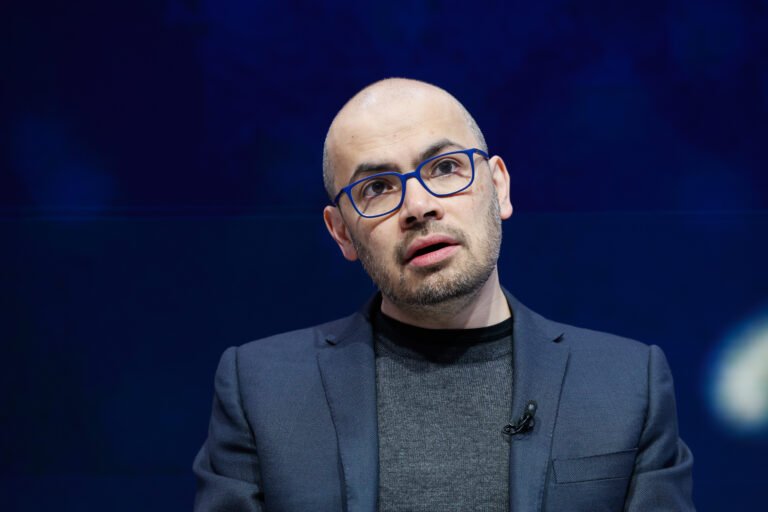
Demis Hassabis thinks the world needs an AI watchdog with the power to hit the brakes if frontier models become too dangerous. Writing in a blog post, the Google DeepMind CEO and cofounder said the US should lead the initiative, arguing that the country is the best placed to set global standards “given its economic […]
The company is raising at least $75 million, led by Robot Ventures, with significant participation from USV and other prominent investors.
With the cash, the company aims to expand its world model offering and reach customers across geographies.
Uber Chief Product Officer Sachin Kansal walks TechCrunch through the company’s financial-services ambitions, its increasingly complicated relationship with Waymo, its new AV Labs data operation, and how AI is starting to show up in ways riders and drivers will actually notice.
They’re rolling up their sleeves again, seemingly out of fear of missing AI’s defining moment and, presumably, the irresistible allure of making even more money — potentially a lot more.
As the US tightens export controls, a thriving black market is helping advanced AI semiconductors reach China
Shift from chatbot errors to autonomous ‘agents’ leaves businesses exposed to widening range of legal claims
Deal signals continued demand for renewable energy despite Trump administration’s efforts to end tax credits and stall plans
The evolution of the technology offers fresh opportunities for hoodwinkers and charlatans
As the US tightens export controls, a thriving black market is helping advanced AI semiconductors reach China
This story originally appeared in The Algorithm, our weekly newsletter on AI. To get stories like this in your inbox first, sign up here. Anthropic—currently the world’s most valuable AI company, with a nearly $1 trillion valuation—has a reputation for publishing strange and heady research. It’s looking into whether AI models can feel pain, for example,…

In this tutorial, we reconstruct the VideoAgent workflow as a runnable, API-key-free multi-agent pipeline. We build an intent parser, an agent library, a tool router, a graph planner, and a textual-gradient optimizer that repairs the execution graph. We wire these planning components to FFmpeg, Whisper transcription, scene detection, keyframe sampling, captioning, cross-modal indexing, and beat-synced editing. By the end, we have a system that answers questions about a video, summarizes it, and produces edited artifacts from natural-language instructions.
The post Building a VideoAgent-Style Multi-Agent System: Intent Parsing, Graph Planning, and Tool Routing for Video Editing Tasks appeared first on MarkTechPost.