
AI lawsuits expose gaps in conventional insurance, says report
Shift from chatbot errors to autonomous ‘agents’ leaves businesses exposed to widening range of legal claims

Shift from chatbot errors to autonomous ‘agents’ leaves businesses exposed to widening range of legal claims
Deal signals continued demand for renewable energy despite Trump administration’s efforts to end tax credits and stall plans
The evolution of the technology offers fresh opportunities for hoodwinkers and charlatans
As the US tightens export controls, a thriving black market is helping advanced AI semiconductors reach China
This story originally appeared in The Algorithm, our weekly newsletter on AI. To get stories like this in your inbox first, sign up here. Anthropic—currently the world’s most valuable AI company, with a nearly $1 trillion valuation—has a reputation for publishing strange and heady research. It’s looking into whether AI models can feel pain, for example,…

In this tutorial, we reconstruct the VideoAgent workflow as a runnable, API-key-free multi-agent pipeline. We build an intent parser, an agent library, a tool router, a graph planner, and a textual-gradient optimizer that repairs the execution graph. We wire these planning components to FFmpeg, Whisper transcription, scene detection, keyframe sampling, captioning, cross-modal indexing, and beat-synced editing. By the end, we have a system that answers questions about a video, summarizes it, and produces edited artifacts from natural-language instructions.
The post Building a VideoAgent-Style Multi-Agent System: Intent Parsing, Graph Planning, and Tool Routing for Video Editing Tasks appeared first on MarkTechPost.
MORPHEUS from Skyfall AI is a persistent enterprise simulation platform for continual reinforcement learning. It runs worlds that never reset, using parameterisable regime shifts and a six-metric evaluation protocol. Across the platform, PPO, HER, EWC, and LCM all remain far below the theoretical upper bound.
The post Skyfall AI Releases MORPHEUS: A Persistent Enterprise Simulation Benchmark That Makes Continual Reinforcement Learning Necessary Under Structured Non-Stationarity appeared first on MarkTechPost.
Apple’s revamped Siri is more than a voice assistant; it’s now the backbone of the iPhone user experience. You can try it now through the iOS 27 public beta.

When Apple employees interviewed for jobs at OpenAI, the AI startup’s hardware head allegedly asked them to show up with something unusual: components they were working on and unreleased product samples. That’s according to a blockbuster lawsuit filed by Apple, which accuses OpenAI of stealing confidential documents, spying on hardware prototypes, and tricking one of […]

iOS 27 escaped the developer world today with the launch of the first public beta. I’ve been testing the new operating system since early June, looking for quirks and seeing if it can live up to the hype Apple promised in the keynote. This year’s iOS upgrades are what one might call a Snow Leopard […]
Some of the new features are powered by Google’s Gemini AI assistant, which reflects the tech giant’s broader push to integrate Gemini across its products while also better positioning Waze to compete with rival services such as Apple Maps.
Claude users in India are starting to see Indian rupee-denominated subscription plans.
What does a world of total user-aligned AI actually look like?
Responding to Musk accusing him of being a scammer, Altman said, “homeboy you’re the one sellling [sic] public market investors on short-term space datacenters.”
Apple’s trade secrets lawsuit against OpenAI contains allegations that range from employees joking about unauthorized access to Apple’s systems to claims that job candidates were asked to bring Apple hardware to interviews. Here are the complaint’s most eye-catching claims.
Of all the debates raging about the potential downsides of AI, there is one worry causing the most hand-wringing among AI enthusiasts in Silicon Valley — that the giant AI labs that sell proprietary models are somehow acting like Trojan horses.

To understand how institutional capital is navigating the gap between AI’s public market software multiples and private market valuations, Crunchbase News recently interviewed Anders Ranum, a partner at Sapphire Ventures, who shared how he strikes an investment balance.

The departing leader says she once declined a full year of medical leave and wishes she had listened when told to “play the long game.”
The post OpenAI’s Simo steps back, reflects on health leave, burnout and AI appeared first on HR Executive.

The lawsuit, filed in U.S. District Court for the Middle District of Georgia, said this surcharge violates a provision of the Employee Retirement Income Security Act.
The post Waffle House sued for $5M over employee tobacco insurance surcharge appeared first on HR Executive.
Wharton research identifies cognitive surrender, a mode of thinking that emerges when employees rely on AI for decisions.
The post Wharton researchers explain how cognitive surrender takes hold when employees lean on AI appeared first on HR Executive.
What benefits market shifts should HR leaders look hard at as the second half of 2026 begins? Get ahead of the situation.
The post 6 benefits market shifts facing HR leaders appeared first on HR Executive.
LinkedIn’s Aneesh Raman explains how AI rewrites work at every level and what it signals for how employers hire, develop and structure talent.
The post LinkedIn: AI is rewriting the first job—and every job after it appeared first on HR Executive.

AI agent crawlers, the bots that fetch pages in real time on behalf of a person waiting for an answer, will be blocked by default on a slice of the web from September 15 onwards. Cloudflare announced the change on July 1, and most of the coverage since then has focused on Google. The more useful part […]
The post AI agent crawlers now need permission. Here’s how to get it appeared first on AI News.

Prime Intellect launched verifiers 0.2.0, previewing a rewritten “v1” core under the verifiers.v1 namespace. It splits an environment into a taskset (what), a harness (how), and a runtime (where), with an interception server that proxies requests and records training-ready traces. Any taskset runs under any compatible harness, with full prime-rl training support at launch.
The post Prime Intellect Releases Verifiers v1: Composable Tasksets, Harnesses, and Runtimes for Agentic RL Training and Evaluations appeared first on MarkTechPost.

Agentic LLMs keep failing the same way because they lack specific, reusable capabilities. Stanford’s TRACE diagnoses those gaps from an agent’s own trajectories, synthesizes one verifiable training environment per capability, trains a LoRA adapter for each, and routes tokens across experts—improving τ²-Bench by +15.3 points and reaching 73.2% Pass@1 on SWE-bench Verified.
The post Stanford Researchers Introduce TRACE: A Capability-Targeted Agentic Training System That Turns Recurrent Agent Failures Into Synthetic RL Environment appeared first on MarkTechPost.

Waze is getting an AI makeover. Google is integrating its flagship AI assistant, Gemini, into the driving app with the goal of letting users personalize their trips a little more. Of the four new updates, only two are being described as involving Gemini. Waze says its updating its conversation reporting feature, first introduced in 2024, […]
Incentives to use new tools are changing as costs start to hit home
TSMC, SK Hynix and Samsung Electronics together account for 29% of MSCI Emerging Markets index
DoorDash, Siemens and Airbnb are among those seeking to curb ballooning bills and reduce reliance on US technology
Most people still use AI like a 2015 search box. You type, you read, you type again. A newer pattern replaces that manual back-and-forth with a loop. This guide explains loop engineering using two verified artifacts. The sources are Andrej Karpathy’s autoresearch repository and the Bilevel Autoresearch paper. The framing follows a write-up by @0xCodila. […]
The post Guide to Loop Engineering: How ‘autoresearch’ and ‘Bilevel Autoresearch’ Turn AI Agents Into Autonomous Machine Learning ML Research Loops appeared first on MarkTechPost.

NeuroVFM is a generalist neuroimaging foundation model from the University of Michigan, trained on 5.24M clinical MRI and CT volumes. Its Vol-JEPA base extends I-JEPA and V-JEPA to volumetric medical imaging, learning brain anatomy and pathology without radiology-report labels.
The post Meet NeuroVFM: A New Neuroimaging Foundation Model Trained With Vol-JEPA on Uncurated Clinical MRI and CT Volumes appeared first on MarkTechPost.

This is The Stepback, a weekly newsletter breaking down one essential story from the tech world. For more on the data center buildout, follow Emma Roth. The Stepback arrives in our subscribers’ inboxes on Sunday at 8AM ET. Opt in for The Stepback here. How it started Years before the AI boom threatened local power […]
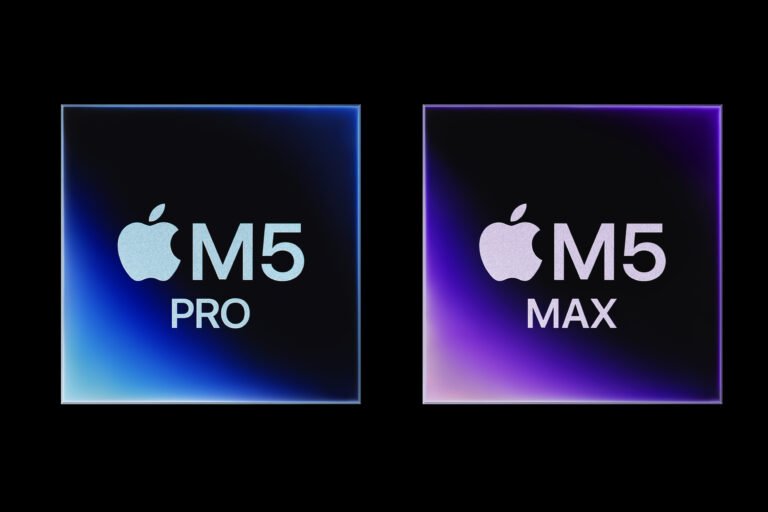
Apple’s self-driving car program never really got off the ground, but it may have been what made the company’s chips the powerful AI performers they are. Early in the development of the self-driving platform, Apple realized that it would need powerful on-device AI processing. While the car processor was never finished, as Mark Gurman details […]

Lorde was performing at the Real Cool Festival in Madrid on Thursday and took some time during her set to speak out against AI glasses. While she didn’t specify any brands in particular, it’s likely she was taking a shot at festival sponsor Ray-Ban, which has collaborated with Meta on a pair of AI smartglasses. […]
Researchers cobbled together funding and time to show how quantum computing could aid in the development of drugs to help underserved populations and combat rare diseases.
Most of the groups that pivoted have not sustained their valuation gains, an FT analysis has found