
Applied Computing wants to give oil and gas operators an AI model for the entire plant
Applied Computing has raised a $20M Series A to build a foundation AI model for the oil, gas and petrochemical industry.

Applied Computing has raised a $20M Series A to build a foundation AI model for the oil, gas and petrochemical industry.
The FT reports Kimi K3 will be the largest open AI model from China, with a parameter count between 2 trillion and 3 trillion.
While everyone in AI is chasing “superintelligence,” Alexandre LeBrun, CEO of Yann LeCun’s world model startup, AMI Labs, dismisses the word.
Drawing on more than a decade spent helping build some of the world’s most influential AI systems, including research that later informed the development of ChatGPT, Andrew Dai explains why he believes visual AI is one of the next major frontiers in artificial intelligence.
You may have heard that OpenAI released its first piece of hardware this week. You may not have heard about the ChatGPT basketball.
DoorDash is opening a limited beta of dd-cli, a command-line tool that lets developers and AI agents search stores, build carts, and place orders from the terminal, marking another step toward software designed for AI agents instead of just humans.
Former OpenAI CTO’s start-up raised $2bn last year at $12bn valuation
Ives and Yorkville. Name a more iconic duo
There is a case for believing AI revenue will grow more slowly than the hyperscalers have baked into their plans
An influential designer says games show us how our minds operate — and could also give us a deeper insight into the ‘mind’ of an LLM
Project is part of ambitious goal to cut development times drastically and ultimately attract venture capital backing
Soofi S 30B-A3B is an open Mamba-Transformer MoE model activating 3.2B of 31.6B parameters for German and English
The post Soofi Consortium Releases Soofi S 30B-A3B: An Open Hybrid Mamba-Transformer MoE Foundation Model For German And English appeared first on MarkTechPost.
Thinking Machines Lab released Inkling on July 15, 2026, its first model trained from scratch. The full weights ship under Apache 2.0. It is a 975B-parameter Mixture-of-Experts transformer with 41B active parameters, a 1M-token context window, and native text, image, and audio input. The lab states plainly that Inkling is not the strongest model available, open or closed. It is positioned instead as a customization base, with controllable thinking effort as the practical differentiator.
The post Thinking Machines Lab Releases Inkling: A 975B-Parameter Open-Weights Multimodal MoE With 41B Active Parameters And Controllable Thinking Effort appeared first on MarkTechPost.
SpaceXAI published the Grok Build source on July 15, 2026. The Apache 2.0 Rust tree covers the agent loop, tool dispatch, the TUI, and the extension system. Grok 4.5 stays closed, and external contributions are not accepted.
The post SpaceXAI Open-Sources Grok Build: The Rust Agent Harness, TUI, and Tool Layer Behind Its Coding CLI appeared first on MarkTechPost.

We explore the Patter SDK by building a voice-agent workflow for a restaurant booking use case. We define dynamic caller variables, register callable tools for availability, bookings, hours, and human transfer, and layer output guardrails over every reply. We simulate speech-to-text and text-to-speech behavior, run scripted call flows, and track modeled latency and cost in a dashboard. We validate the agent with a deterministic eval harness, then map the same logic to a real deployment using Twilio and OpenAI Realtime.
The post Patter SDK Guide to Building a Restaurant Booking Phone Agent with Dynamic Variables, Guardrails, Latency Dashboards, and Eval Checks appeared first on MarkTechPost.
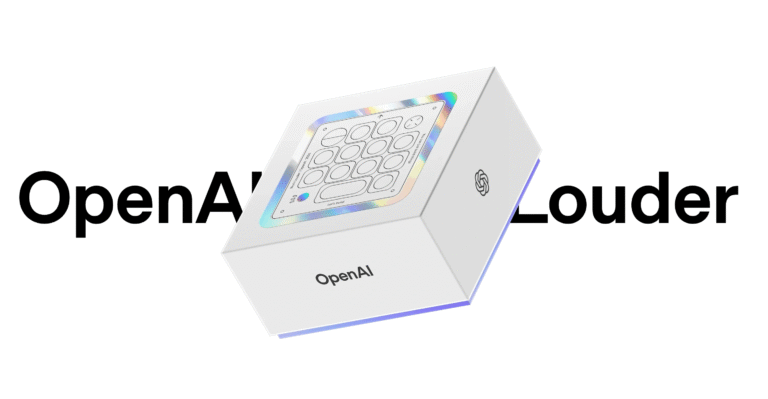
OpenAI is finally releasing some hardware. No, it isn’t the mysterious AI-powered device the company is developing with former Apple designer Jony Ive, a project already tangled up in a messy lawsuit. Instead, it’s a product designed to be used with its coding platform, Codex. The device, a square-shaped block of buttons called Codex Micro, […]

Suno data obtained in a hacking incident has exposed that the AI music generator was trained by scraping millions of songs and lyrics from online audio platforms, including YouTube Music, Deezer, and Genius, 404 Media reports. Given that Suno has avoided revealing what’s in its training datasets and how they were acquired, this a rare […]

This weekend, cinephiles across the world will march to their local theaters to feast their eyes on Christopher Nolan’s new adaptation of The Odyssey. It’s on track to rake in anywhere between $80-$100 million in just a few days. People are clearly excited to see how Nolan uses cutting-edge filmmaking tech to make the Homeric […]
The Elon Musk-owned xAI is suing a South Carolina man who allegedly used the company’s Grok AI chatbot to generate child sexual abuse material (CSAM). In a lawsuit reported earlier by Reuters, xAI claims Terry Wayne Harwood “knowingly and intentionally used Grok to circumvent safeguards, alter nonconsensual images, and generate and distribute CSAM,” breaching the […]
Across 101 enterprises, agent orchestration is consolidating onto model-provider platforms — Anthropic’s Claude leads by a wide margin — chosen for the gravity of the underlying model and judged on reliable multi-step execution. But the ambition runs well ahead of the reality: most deployed “agents” are still chatbot wrappers, the control plane enterprises expect is deliberately hybrid to avoid lock-in, and real-time fiscal control over token burn remains the exception.
This wave of VentureBeat Pulse Research examines enterprise agent orchestration: which platforms enterprises run on, what drives the choice, what they optimize for, how they expect agent control to be structured, and — most revealingly — how orchestrated their deployed “agents” actually are and how tightly they control the cost of running them.
The central finding is a gap between orchestration ambition and orchestration reality. Enterprises are consolidating fast onto the major model platforms: Anthropic’s Claude is the primary platform for 40%, more than double any rival, followed by Microsoft (18%) and OpenAI (13%). The choice is driven by “model gravity” — native alignment with a state-of-the-art base model (21%) — and success is judged by reliable, multi-step execution (task completion reliability 32%, multi-step workflow management 28%). Yet asked to assess their portfolios honestly, 71% say a quarter or fewer of their deployed “agents” are true multi-step orchestrated workflows rather than single-prompt chatbot wrappers, and only 10% have crossed the halfway mark. The orchestration layer is being built well ahead of the orchestrated portfolio it is meant to run.
That gap shapes the architecture enterprises are putting in place. By the end of 2026 a clear majority (51%) expect a hybrid control plane — provider-native plus external orchestration — and only 6% expect to hand control to a provider-managed service, because vendor lock-in (35%) is the risk they fear most if control lives inside a model provider. Investment follows the build-out: agent workflow tooling leads the spend (34%), with security and permissions enforcement (25%) behind. And fiscal control lags throughout — more than a quarter (27%) have no real-time way to stop a runaway agent before the bill arrives.
VentureBeat fielded this survey as part of its ongoing Pulse Research series, this instrument focused on enterprise agent orchestration. Responses are filtered to organizations with 100 or more employees (n=101), drawn from a single June 2026 wave; because this is one wave rather than a pooled multi-month sample, the report reads cross-sectionally and does not infer month-over-month trends.
By organization size the sample is spread evenly across the enterprise bands: 100–499 employees, 2,500–9,999, and 50,000+ (21% each), with 10,000–49,999 and 500–2,499 (19% each). By role it is senior and buyer-credible: product and program managers (15%), CIO/CTO/CISO (13%), consultants and advisors (13%), and a spread of data, AI, and engineering directors and VPs, with an “Other” function at 18%. On purchasing, 81% are recommenders, influencers, or final decision-makers for AI solutions (66% recommender/influencer, 15% final decision-maker). Technology/Software is the largest industry at 44%, followed by Financial Services (17%) and Healthcare/Life Sciences (8%).
At 101 respondents the sample is robust enough to read directionally with reasonable confidence, though it remains self-selected and is not a probability sample.
Anthropic’s Claude leads; open frameworks are marginal
We asked which agent orchestration platform enterprises primarily use today. The answer concentrates on the major model providers — and on one in particular.
A note on reading these shares. As described in the methodology section, the respondents are self-selected, and this question asked them for a single primary platform — so the figures measure which platform leads each enterprise's deployment, within a self-selected audience of AI-active technical decision-makers. A sample built this way can diverge substantially from spend-weighted market measures, and each VB Pulse survey draws its own sample with its own company-size mix, so vendor figures should not be compared across our surveys either. Read these shares as a portrait of where this cohort has placed its primary orchestration bet today, rather than as market share.
The model platforms dominate. Anthropic, Microsoft, OpenAI, Google, and Amazon together account for roughly 80% of deployments (81 of 101), while the open frameworks (LangChain/LangGraph) and custom in-house builds that anchor engineering discussion sit in single digits. Anthropic’s lead — 40%, more than double the next platform — mirrors the “model gravity” selection logic in Finding 2: enterprises are choosing the orchestration layer that comes with the model they want to build on. As with the security vendors in the prior agent-security wave, the tools that define the category in technical circles are not yet where enterprise deployment concentrates. A small 3% are not orchestrating at all.
Respondents rate the platforms they run at 3.94 out of 5 overall (109 answered), with “value for money” specifically at 3.94 and “ease of implementation” the weakest score, at 3.85 — placing orchestration near the bottom of our five-tracker satisfaction range, ahead of only evaluation tooling. A rating just under 4 out of 5, from users of whom 96% plan to change their orchestration approach within the year, reads as provisional acceptance: the platforms work well enough to run today, and not well enough to stop the search for something better. The ratings sit alongside near-universal intent to change; this is a layer enterprises tolerate more than they love.
The base model, not the tooling, decides the platform
We asked what most influenced the orchestration platform choice. The single largest factor is the pull of the underlying model — though flexibility and ease of development follow close behind.
Model gravity leading is the selection-side explanation for Anthropic’s platform lead: enterprises pick the orchestration environment closest to the frontier model they have standardized on. But the next tier complicates the picture — flexibility across models and tools (17%) and ease of development (17%) say enterprises also want to avoid being trapped by that choice, foreshadowing the lock-in fear in Finding 6. Security and permissions (14%) and total cost of ownership (11%) round out a pragmatic buying logic. Performance (latency/memory) sits last at 4%, a reminder that at this stage of adoption the binding constraints are model fit and optionality, not raw speed.
Enterprises just orchestration by whether it completes the work
We asked what enterprises optimize for — their primary success metric for orchestration. Reliability and multi-step workflow management dominate; developer- and user-facing metrics trail.
Task completion reliability (32%) and multi-step workflow management (28%) together account for 59% of responses (60 of 101): orchestration succeeds, in the enterprise view, when it reliably carries a task through multiple steps to completion. Developer productivity (17%) matters but is secondary — the inverse of its prominence in framework discussion — and end-user experience (9%) is a minor concern, consistent with orchestration being an internal execution problem rather than a UX one. This reliability-first standard is exactly what makes the Chatbot Trap finding so pointed: enterprises define success as dependable multi-step execution, yet most of their deployed “agents” do not yet do multi-step work at all.
The trap is not evenly distributed. Splitting the sample by organization size, 77% of smaller enterprises say a quarter or fewer of their agents do true multi-step work, against 62% of larger ones. Larger enterprises are meaningfully further into genuine multi-step deployment; the chatbot trap is, directionally, a mid-market condition.
Three strategic moves are nearly tied for the year ahead
We asked what major change enterprises anticipate in their orchestration strategy over the next 12 months. Three moves cluster at the top, almost evenly split.
The top three — building in-house control (25%), standardizing on one framework (24%), and moving agents from sandbox to production (23%) — are statistically indistinguishable and tell a single story: enterprises are moving from experimentation to operational consolidation. They want fewer frameworks, more production exposure, and more ownership of the control layer; only 4% expect no change. The appetite for custom in-house control planes is notable alongside the platform concentration in Finding 1 — enterprises are standardizing on model-provider platforms while simultaneously planning to wrap them in control logic they own, the hybrid posture that Finding 6 makes explicit.
Tooling and permissions lead the spend; monitoring trails
We asked which orchestration-related investment will grow most next year. Agent workflow tooling leads, with security and permissions enforcement behind.
Workflow tooling leading (34%) is the budget-side expression of the reliability-and-multi-step priority in Finding 3: the money is going to the machinery that strings steps together dependably. Security and permissions enforcement (25%) and scaling infrastructure (20%) follow — the investments required to take agents from sandbox into production, the strategic move in Finding 4. Monitoring and debugging draws a smaller 11%, with another 11% reporting flat budgets. The weight on tooling, permissions, and scaling over pure observability signals that enterprises are spending to build and harden orchestration, not merely to watch it run.
Enterprises expect to split control between providers and their own layer
We asked where enterprises expect the primary control plane for agents to live by the end of 2026, and what worries them most if that control sits inside a model-provider platform. A clear majority expect a hybrid model — and vendor lock-in is the reason.
Hybrid control is the dominant expectation by a wide margin (51%), and only 6% expect to hand control to a provider-managed service outright. Read together, the hybrid, custom, and externally-abstracted options — every architecture that keeps control at least partly outside the provider — sum to 88% (89 of 101). The reason surfaces directly when we asked about the risk of provider-resident control: vendor lock-in leads at 35% (35 of 101), ahead of security and permissioning limitations (28%) and inflexibility across models and tools (21%). The pattern echoes the prior wave’s “don’t trust the model to police itself” posture — here, enterprises will build on a provider’s platform but decline to be governed entirely by it. The hybrid control plane is the architectural hedge against the lock-in they most fear.
The June figure asserting a preference for a hybrid control plane marks movement from earlier. In the April–May survey (n=145), only 34% expected a hybrid control plane, and a greater number (12%) expected to hand control fully to a provider-managed service. These two snapshots don’t yet measure a confirmed longitudinal trend — but the direction of the conversation is unambiguous: toward keeping control.
Lock-in is also a new arrival as a top concern. In the April–May wave, the leading concern was security and permissioning limitations (32%), with lock-in second at 24%; by June the two had traded places. The worry about provider platforms appears to be maturing from whether they can be secured to whether they can be replaced.
Enterprises admit most deployments are still chatbot wrappers
We asked enterprises to assess their portfolios honestly: what share of their deployed “agents” are true multi-step orchestrated workflows versus simple single-prompt chatbot wrappers. The answer is the defining finding of this wave.
This is the gap at the center of the report. Combining the bottom two bands, 71% of enterprises (72 of 101) say a quarter or fewer of their deployed “agents” are genuinely orchestrated — and just 10% (10 of 101) have crossed the halfway mark. The ambition documented in the earlier findings — model-provider platforms, reliability-first success metrics, production rollouts, a deliberate control architecture — runs well ahead of the deployed reality, which remains overwhelmingly single-prompt assistants dressed as agents. This is less a contradiction than a roadmap: the platforms, budgets, and strategies are being put in place precisely because the orchestrated portfolio is still so thin. The open question for later waves is how fast the reality closes on the ambition.
Only a minority can stop a runaway agent before the bill arrives
Finally, we asked how enterprises enforce fiscal control over agent token consumption — the risk that an autonomous loop exhausts a budget before anyone intervenes. Most rely on native caps or after-the-fact monitoring; real-time programmatic control is the exception.
More than a quarter of enterprises (27%) admit they have no real-time, programmatic way to stop an agent before a budget-breaking bill arrives — they learn of it from the logs afterward. Another 32% lean entirely on the native caps and throttles built into their primary platform, a control only as good as the provider’s tooling and one that ties back to the lock-in concern of Finding 6. The enterprises building custom gateways (23%) or exploiting cross-model routing to arbitrage cost (19%) are the ones treating token burn as an engineering problem to be controlled deterministically. As with orchestration maturity, fiscal control is an area where the operational reality lags the ambition: agents are moving toward production faster than the cost-control plane around them is being built.
It’s worth noting, a split appears according to company size: roughly one in three enterprises under 2,500 employees (34%) exercises only reactive control of agent spend, against 20% of larger enterprises — directional figures, but consistent with the chatbot-trap split. The mid-market is running the least mature agents on the least instrumented budgets.
Organizations with 100 or more employees describe an orchestration strategy that is consolidating quickly and maturing slowly. They are standardizing on model-provider platforms — Anthropic’s Claude leads at 40% — chosen for the gravity of the underlying model, and they judge success by reliable multi-step execution. Investment is flowing to workflow tooling and permissions, the strategy is to consolidate frameworks and push agents into production, and the control plane they expect is deliberately hybrid, because vendor lock-in is the risk they fear most.
But the honest self-assessment punctures the ambition. Seventy-one percent say a quarter or fewer of their deployed “agents” are truly orchestrated, only 10% are past the halfway mark, and more than a quarter cannot stop a runaway agent in real time. The orchestration layer — the platforms, the budgets, the control architecture — is being built ahead of the orchestrated portfolio it is meant to run. At 101 respondents in a single June wave this reads as a clear directional signal rather than a precise measurement: enterprises have decided how they want to orchestrate agents well before most of their agents are doing anything an orchestration layer is for. The question for subsequent waves is whether the deployed reality closes the gap on the ambition — or whether the chatbot trap proves stickier than the roadmap assumes.
Based on survey responses from 101 qualified enterprise respondents (100+ employees), drawn from a single June 2026 wave. Because this is one wave rather than a pooled multi-month sample, results read directionally rather than as a confirmed trend. Respondents include product and program managers, CIOs, CTOs and CISOs, consultants and advisors, and directors and VPs of data, AI, and engineering, across Technology/Software, Financial Services, Healthcare, and other sectors.
Can a handful of engineers really do the work of an army of consultants? That’s the bet behind Ode with Anthropic — the joint venture dedicated to embedding forward-deployed engineers in enterprise firms, backed by Anthropic, Blackstone, Hellman & Friedman, Goldman Sachs and others. On this episode of TechCrunch’s Equity podcast, Rebecca Bellan sits down with Ode’s leaders Chris Taylor and Eddie Siegel, who founded Fractional AI, […]
The deal, which was rumored to be in the works last year, marks an important step for Apple’s AI ambitions in a key market.
Microsoft’s monthly release of security fixes, dubbed Patch Tuesday, resolved a record 570 security vulnerabilities across the company’s product line, thanks to discoveries with AI.
Livestream shopping platform Whatnot has acquired AI startup Shaped, a machine learning company focused on real-time recommendations and search. The deal will bolster Whatnot’s personalization and discovery features as it expands into new product categories.
The hacker used an employee’s credentials to access source code, which revealed how Suno scraped decades of audio.
It’s the company’s first public proof point after a year and a half spent building AI infrastructure largely out of public view.
The stock has steadily fallen from the euphoric post-IPO high, showing that markets may be sobering up to the promises CEO Elon Musk made before and after SpaceX went public.
OpenAI, which is in the middle of a legal battle with Apple over hardware trade theft allegations, just released a light-up keyboard designed to be paired with its agentic coding app.
Microsoft is looking to sell its in-house AI models as more efficient and cost-effective than its competitors’ models.
AI demand is starting to crowd out other forms of sector spending
Supply chains must not only comply with regulations, they also have to be able to adapt to shocks
Shares climb as Dutch company strikes bullish tone on durability of AI boom
Stock trades below $135 for first time since AI and space conglomerate’s Wall Street debut in June

The wind-downs at PayPal and Fidelity International may look like a retreat, but the data points to a concentration of power at the top of the market that smaller funds will feel first, writes guest author Steve Brotman of Alpha Partners.

Venture funding into fintech startups climbed nearly 23% year over year in H1 2026, even as deal count fell more than 25%, Crunchbase data shows, a sign that investors are writing fewer, but much larger checks into the sector as they focus on areas such as wealth management, financial infrastructure and enterprise automation. We take a look at the numbers.
IBM’s CEO issued a warning that Q2 revenue fell short of expectations, sinking stocks by up to 25% on Tuesday.
The post What IBM’s really bad day on Wall Street says about AI investment appeared first on HR Executive.